Kaʻū Forest Farm
Kaʻū Forest Farm began as a mixed forest of native and invasive species, requiring a thoughtful approach to restore ecological balance while creating a productive, culturally meaningful landscape. Our first step was the selective removal of non-native Christmasberry trees, opening space and light for the existing native ʻōhiʻa and ʻōlapa-associated forest canopy, particularly the mature alaheʻe trees that had been suppressed by invasive growth. By carefully clearing competition and allowing the native trees to thrive, we began the process of transforming an overgrown woodland into a more diverse and resilient forest system.
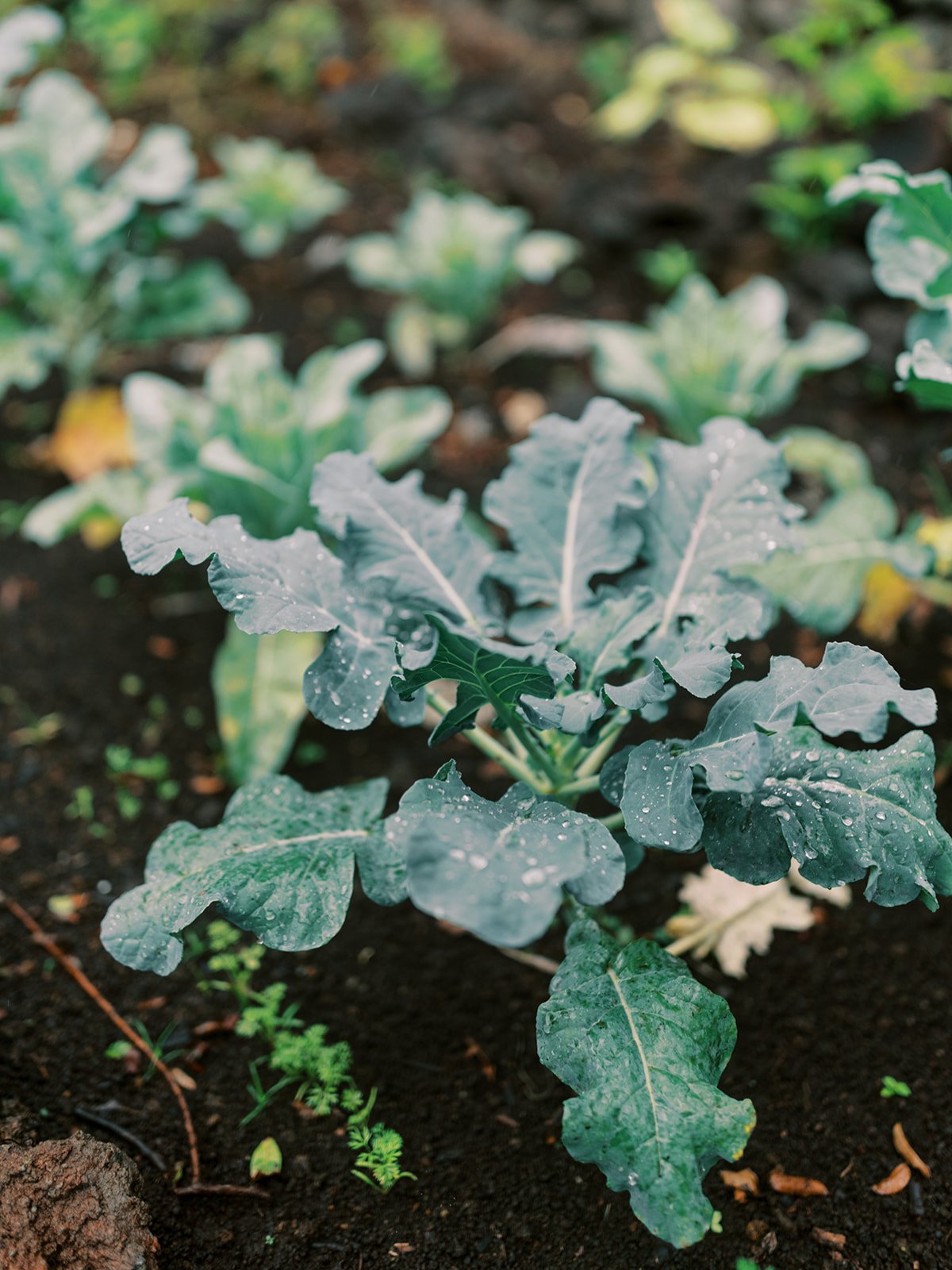
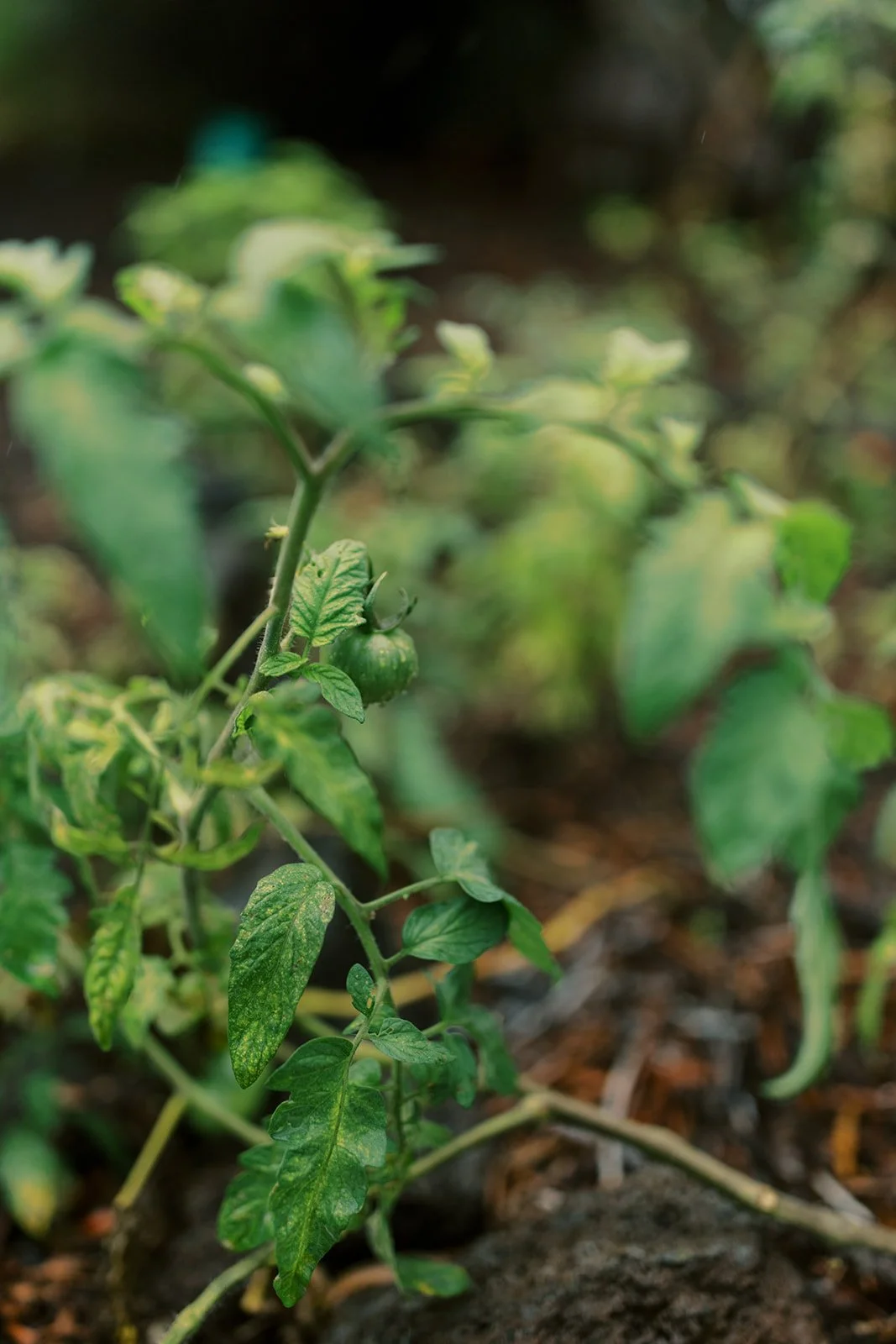
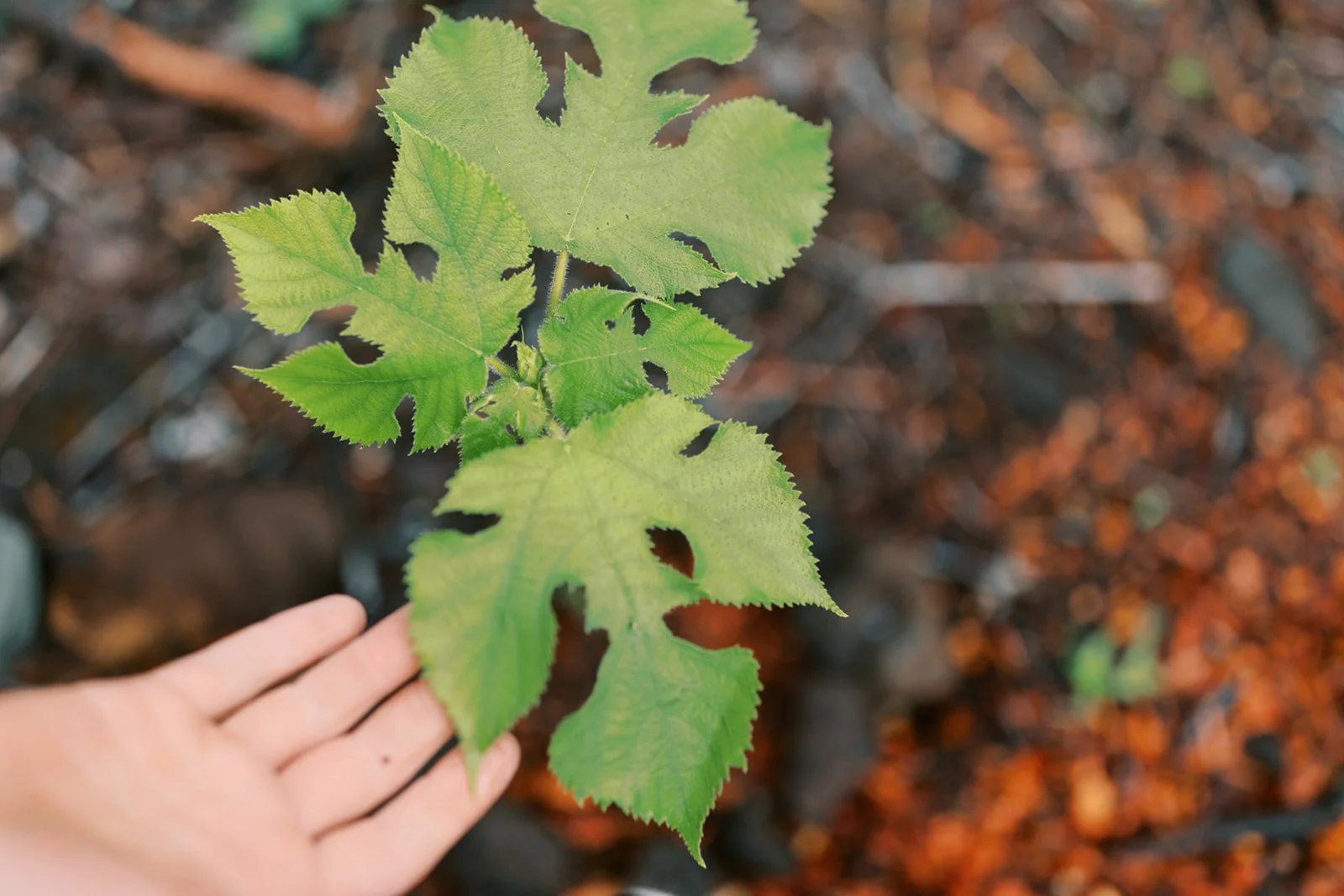
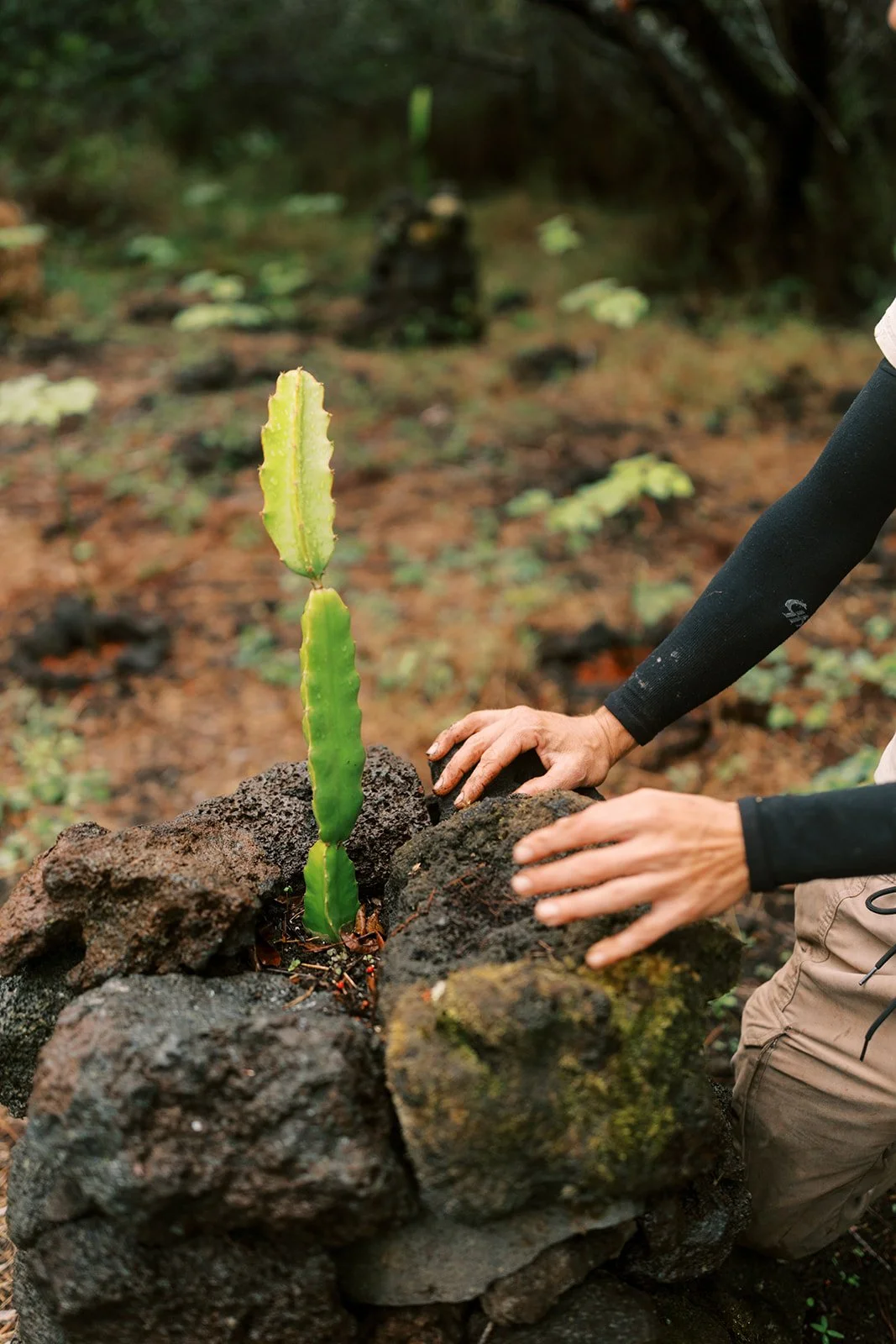
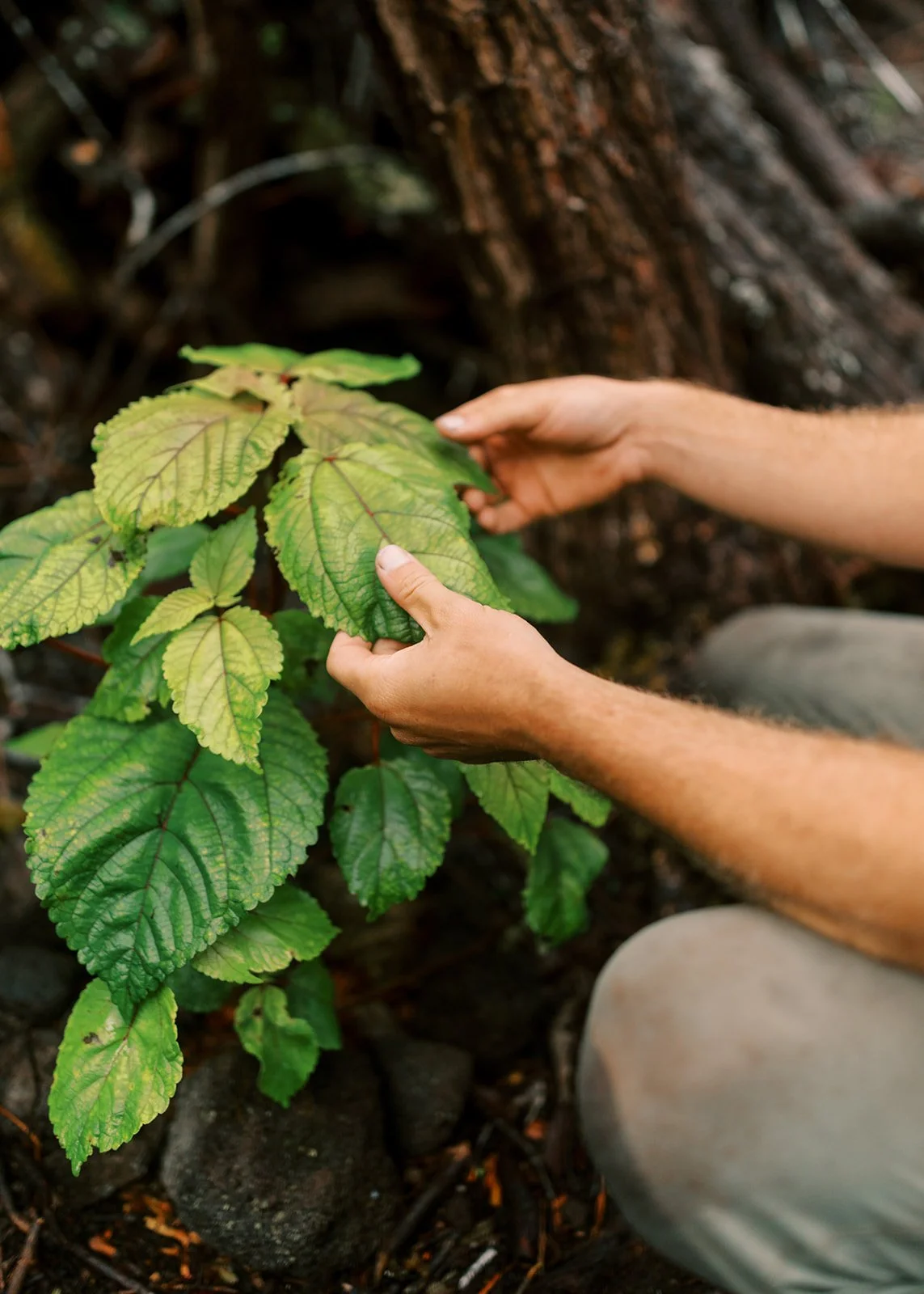
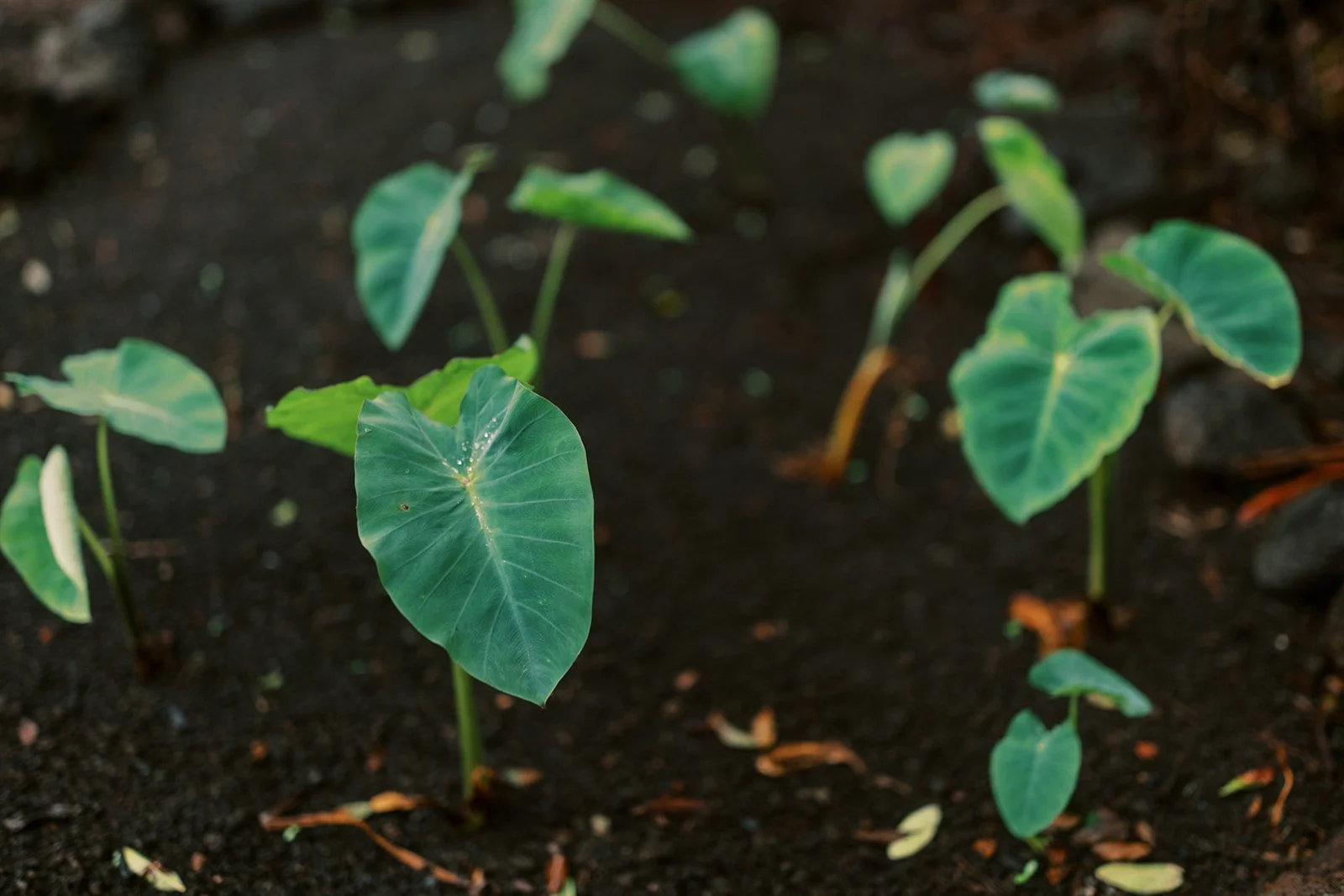
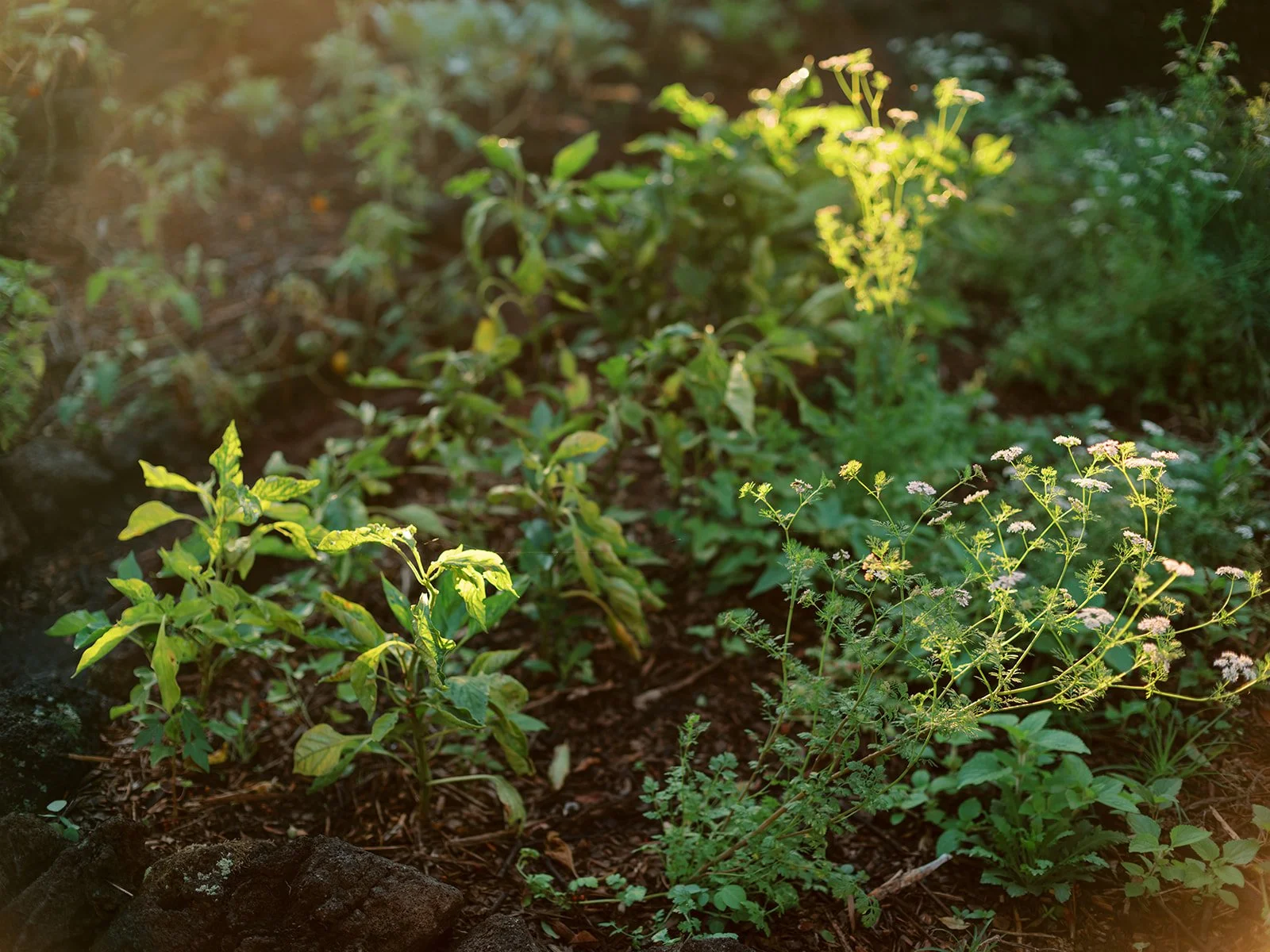
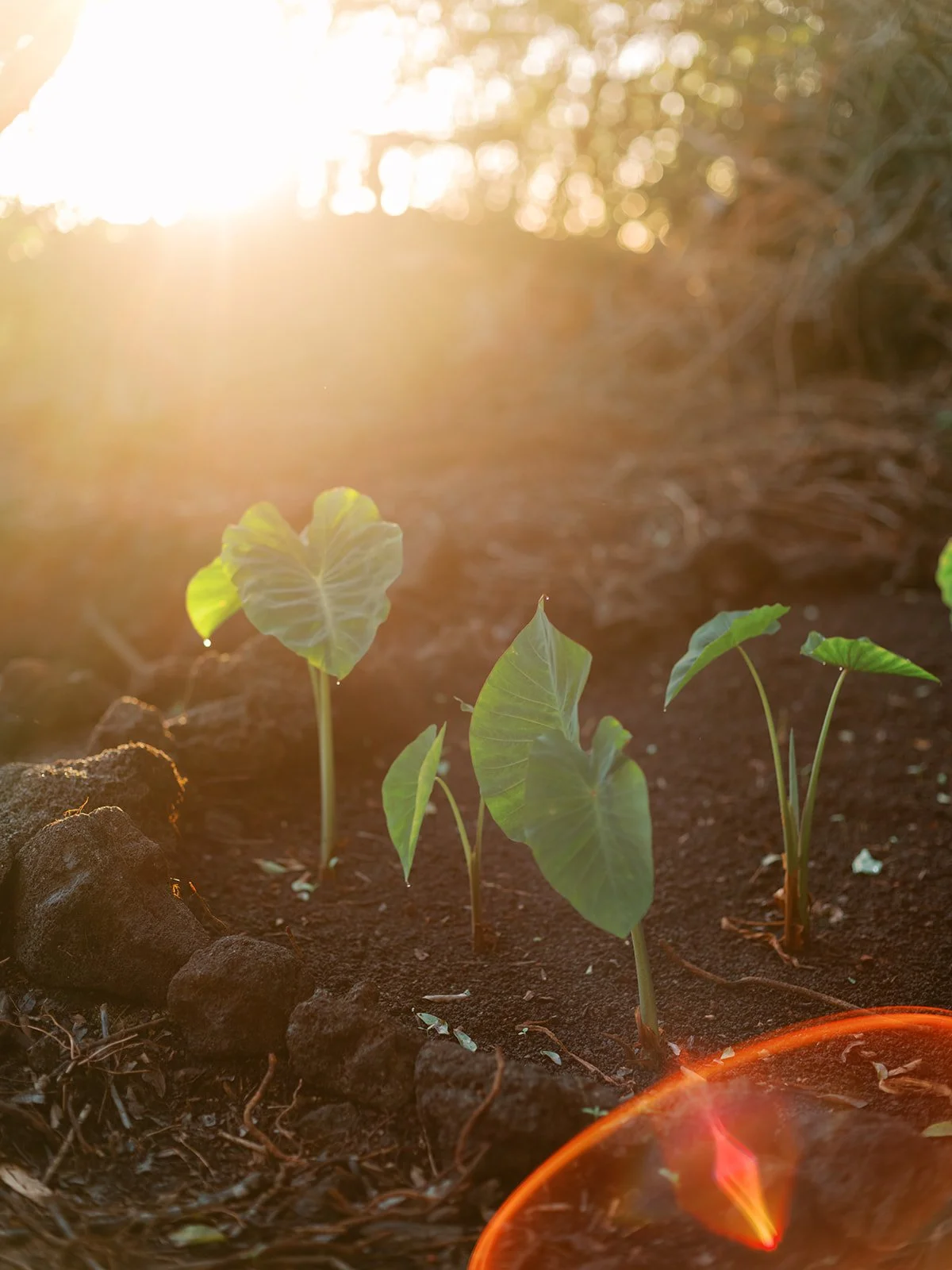
Following the restoration of the canopy, we enriched the forest floor with a layered planting strategy focused on native and naturalized Hawaiian crops and long-term resources. We introduced wauke for traditional kapa-making, kalo as a foundational food crop, and future timber species including milo, kou, and kamani. We also expanded the native forest community through the reintroduction of ʻōhiʻa and lama, strengthening the ecological character of the landscape for generations to come. As part of the farm’s agricultural infrastructure, we created a vegetable garden by screening the existing native soil to remove small stones and pebbles—materials that were repurposed as landscape gravel—then using the refined native soil to backfill and establish productive garden beds. The result is a regenerative forest farm that honors Hawaiian land stewardship practices while creating a diverse, self-sustaining landscape of food, craft materials, and future forest resources.